


Inscription

Contact us

School route
Genech site

Bus line and stop information for the Genech site. More information on the network website:

Apprenticeship
Lesquin site

Bus line and stop information for the Lesquin site. More information on the network website:

The training

Level 5 State Diploma, issued by the Ministry of Agriculture and Food Sovereignty. Registered in the RNCP under number 39685.
Objectives

The BTS in Livestock Management and Farming trains technicians who are capable of applying scientific and technical skills to livestock farming systems.

The aims of the training are to:

  • Implement, understand and analyse the management of a livestock farm; ;
  • Mastering the economic, environmental, social and health issues related to animal production; ;
  • Training in the management and leadership of an agricultural business
School

Year 1

Semester 1: Observe

  • EU 1.1: Information retrieval on social issues
  • Module 1.2: Presentation of a farming system and measurement of occupational health and safety risks
  • Module 1.3: Assessment of the feasibility of integrating a processing workshop in response to the issues identified on a livestock farm

Semester 2: Practising

  • Module 2.1: From observation to practice: optimising ruminant livestock management
  • Unit 2.2: Conducting a multicriteria diagnosis and assessing the efficiency of material and human production resources
  • Module 2.3: Project Management

Year 2

Term 3: Analyse

  • UE 3.1: Monitoring a socio-technical change in line with societal and economic realities
  • UE 3.2: Proposal for an approach to an issue in pig farming and strategic development of the system
  • UE 3.3: Opening up to professional opportunities

Semester 4: Counsellor

  • Module 4.1: Sustainability study of a livestock farm and proposal for alternative technical solutions
  • UE 4.2: Acting as a livestock advisor: utilising best practice in the context of socio-technical support
  • Module 4.3: Personal and professional progression
Apprenticeship
  • B1: Engaging with the modern world
  • B2: Personal and Professional Project Development
  • B3: Communicating in various situations and contexts
  • B4: Managing livestock production
  • B5: Managing a livestock system
  • B6: Organise the production activity
  • B7: Address a specific animal production issue
  • B8: Supporting socio-technical change

Local Initiative Modules (EIL) common to all BTSA courses:

  • A marketing approach to a product or service
  • How to harness all the resources available to support business start-ups in the Hauts-de-France region
  • Diversification of the agricultural business
  • Innovative approaches to infrastructure provision in line with the transitions
  • Agricultural negotiation technique

School

12 to 16 weeks' work placement:

  • 2 weeks on a ruminant livestock farm or 4 weeks abroad
  • 2 weeks on the Institute's farms
  • 2 weeks in pig farming
  • Minimum of 8 weeks in an organisation or breeding establishment

APPRENTICESHIP

On average 15 days in a training centre, then 15 days in the company
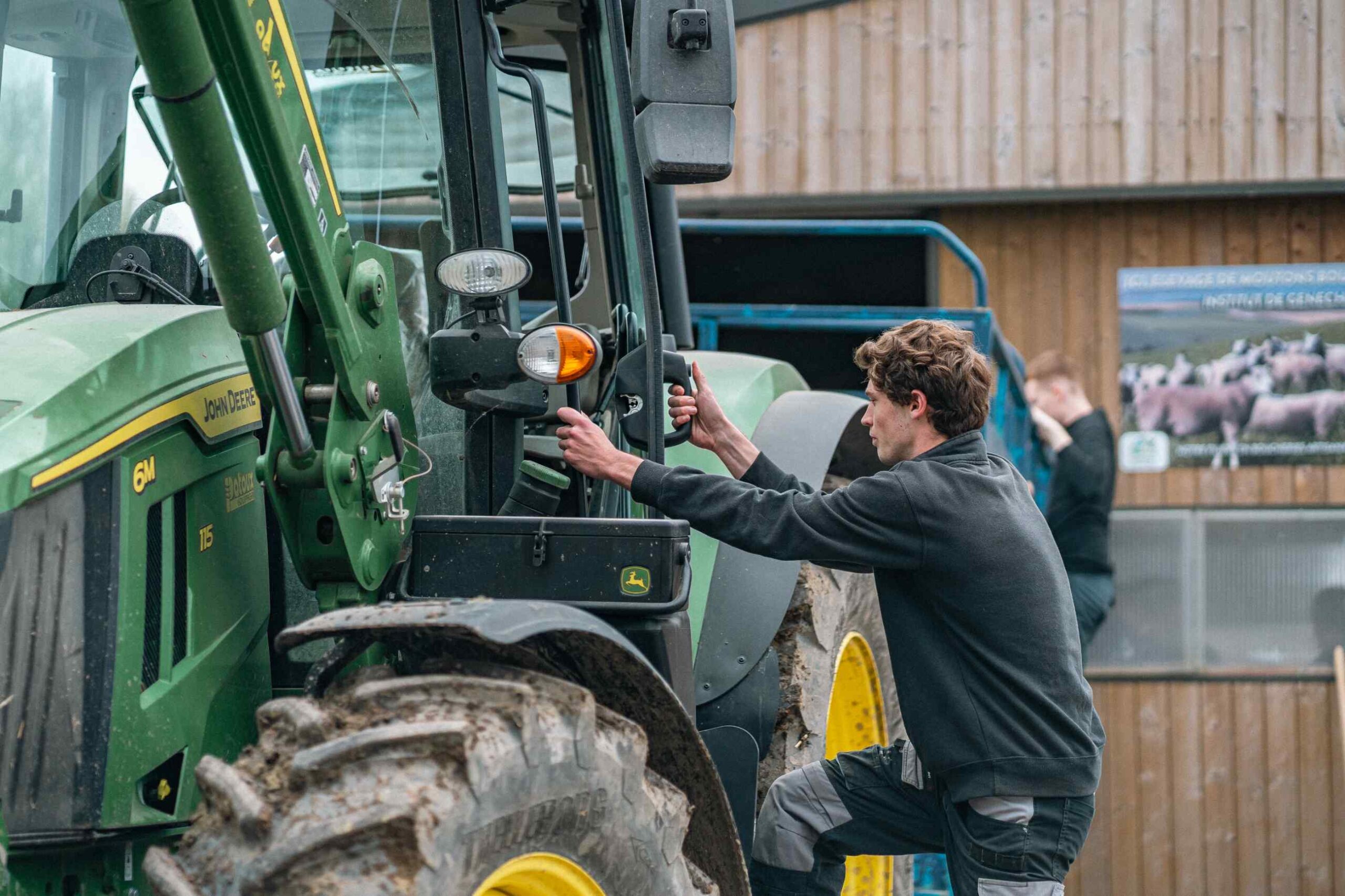
  • Practical workplace scenarios and regular work experience placements on livestock farms and agricultural holdings
  • Use of a variety of educational facilities: educational farm, dairy farm, sheep farm, horse farm
  • Practical work at the training centre and in the field (handling animals, observations, care, technical monitoring)
  • Active learning: thematic projects, problem-based learning and group work
  • Visits to farms and businesses in the sector, and attendance at trade fairs
  • Study trips and educational outings in France relating to the agricultural sector
  • Participation in professional competitions (Ovinpiades, Agricultural Education Trophy, young stockjudging competitions, technical challenges, etc.)
  • Opening up to the professional world through job dating, career networking events and close links with businesses
Agriculture-005

Our strengths

Three complementary campuses (Genech, Lesquin, Bavay), welcoming halls of residence, a vibrant student life and unique learning environments.

Find out all about the support available on our dedicated page:

Find out all about our international activities on our dedicated page:

Farm, greenhouses, laboratory, technical workshops… discover all our educational workshops, which serve as genuine technical facilities for learning in real-world conditions.

What next?

Further study

Through the standard route or the apprenticeship route:

  • Professional bachelor’s degrees (Livestock Farming Consultancy, Marketing of Livestock Products, Genetics, etc.)
  • Specialist certificates (Dairy, Pig, Sheep, Goat, Processing of livestock products, etc.)
  • On a three-year engineering course (work-study scheme)
  • Veterinary school (via competitive entrance exams, preparatory course followed by veterinary school, or studying abroad)

career prospects

  • Technical Sales Adviser
  • Livestock adviser
  • Livestock technician / inseminator
  • Breeder

Sectors: cooperatives, producer groups, agricultural professional organisations, local authorities, animal feed, farm supply and livestock housing companies.

Information

practices

Tariffs

School

  • Non-resident student: from €156 per month
  • Student residing at the Institute: from €342 per month

* Base rate including family contributions and/or meals and/or accommodation depending on the learner's status. Additional fees not included. Payable over 10 months.

APPRENTICESHIP

For 12 months: £XX

(Training costs are covered by OPCOs and funding obtained by the CFA. There is therefore no remaining cost for the apprentice and the company.).

Find the breakdown of training costs on our dedicated page

Bursaries: check our dedicated page to find out about the financial support available depending on your situation.

Read the terms and conditions of sale

  • Recent A-level holders wishing to work in the livestock sector
  • Students retraining for careers in agriculture or animal care
  • Candidates motivated by farm work and livestock production
  • Holding at least a degree in Level 4 (A-level)
  • For apprenticeships: aged between 16 and 29 (exemptions possible in certain situations)

School

  • Applicants apply via the Parcoursup platform
  • Admission based on academic record (grades + motivation)

APPRENTICESHIP

  • Application via Parcoursup or directly with the institution
  • One-to-one interview and placement test
  • Entry onto the training course is conditional upon validation and signature of the apprenticeship contract

School

Continuous assessment certification exams

APPRENTICESHIP

  • Ongoing certification assessments
  • Final exams
  • Premises: Fire safety regulations for public buildings (ERP) – Premises accessible to people with reduced mobility
  • Possible academic guidance and adaptation, mentored by a disability officer
Motif5
Portrait-sup

Your future

Start here!

Sign up now or chat with our team for personalised advice.

Contact us

Would you like to share some information with us or leave a message that is not about a training course? Fill in this form. To find out about one of our training courses, click HERE
By clicking "Send", you accept the T&Cs and declare that you have read the site's data protection policy.